
We develop ground-mounted photovoltaic systems and offer you an attractive lease model.
- Revenue over 20–30 years
- No costs for you
- We handle the entire project
How do I lease land for solar power?
If you’d like to lease your land for a solar power system, the process follows a clear and well-structured sequence. From the initial inquiry to implementation, we’ll guide you step by step—it’s often easier than many people think:
01
Submit a Request – Get Started Easily with Leasing Land for Solar Power
The first step is to provide us with the key details about your property if you’d like to lease your land for a solar power system—such as its location, size, and current use. This basic information is sufficient to allow us to provide an initial assessment. Please feel free to use our form below for this purpose.
02
Free Land Assessment for Leasing
As soon as we receive your inquiry, we’ll assess whether your land is suitable for leasing for photovoltaic use and whether it can be utilized in a financially viable manner. In doing so, we’ll analyze factors such as the location and size of the land, its distance from the power grid, and the likelihood of obtaining the necessary permits. You’ll receive a clear and honest assessment of whether leasing your land is a sound decision.
03
Customized Offer for Your Land
If your land is suitable for a solar power lease, we’ll prepare a detailed proposal with all relevant information, such as the potential lease payment per hectare, the contract term, and the project’s prospects. This way, you’ll know exactly what income you can expect before making a decision.
04
Contract Execution & Implementation
If you decide to lease your land for a solar power system, we’ll guide you through every step of the process until the project is completed. We’ll handle the planning and project development, all permitting procedures, as well as the construction and operation of the system. For you, this means: no extra work, full transparency, and predictable income.
How much can I earn by leasing land for a solar power system? Get a no-obligation estimate now:
Change unit:
Your potential lease income:
Which areas are not suitable for solar power?
Not every piece of agricultural land is automatically suitable for a solar farm. There are clear criteria that determine whether leasing the land is economically viable and eligible for approval. You can find suitable types of land under ground-mounted photovoltaics. The following factors would argue against leasing your land for a photovoltaic system:

Areas within Protected Zones
These include nature reserves and scenic areas, as well as certain ecological priority areas. In these areas, obtaining permits for photovoltaic systems is usually very difficult or impossible.

Very small or fragmented parcels of land
Plots of land smaller than about 5 hectares or highly fragmented parcels are often not economically viable. Contiguous tracts of land are required for the development of a solar farm.

Inaccessible location or lack of network connectivity
If your site is located far from the nearest feed-in point, connecting to the power grid may not be cost-effective. A good grid infrastructure is crucial.
Konstantin Gastmann | Berlin
For such a long-term project, professionalism, reliability, and having dedicated points of contact were especially important to us. That’s exactly what we’ve experienced with hep solar from the very beginning. Our questions are answered quickly, and the team is also personally involved on-site—for example, when presenting the project to the town council.
Thanks to the monthly updates, we’re always informed about the current status and the next steps. So far, we’ve felt very well supported and can definitely recommend working with them.
Leasing Land for Solar Power—Any Questions?
Areas outside of towns are generally well-suited for leasing land for solar power—especially if they are large and contiguous. However, whether leasing is truly worthwhile depends heavily on factors such as location, grid connection, and the likelihood of obtaining permits.
The best way to determine this is on a case-by-case basis. Have your property evaluated with no obligation—we’ll provide you with a specific assessment.
Yields depend heavily on the location and specific conditions. In Germany, annual yields of roughly 800,000 to 1,200,000 kWh per hectare are possible. For you as the owner, the most important factor is how this translates into profitability and lease terms.
An accurate assessment can only be made on a location-specific basis. We would be happy to calculate this individually for your property.
If you lease your land for a solar power system, you’ll benefit from a steady income without any risk or investment on your part. If you operate the system yourself, however, you’ll face:
- high costs
- planning efforts
- financial risks
Which option makes the most sense depends on your goals. We’d be happy to provide you with a no-obligation consultation based on the size of your property.
Certain areas, such as those along highways or railroad tracks, have advantages when it comes to obtaining permits. However, many agricultural areas can also be used—depending on the circumstances.
The process is clearly structured: submit a request, have the space inspected, receive a quote, and sign the contract. The process is simple—we’ll take care of everything.
Approximately 150–200 watts of power can be installed per square meter, depending on the surface structure. The actual power output varies depending on the location.
Yes, in principle, that is possible. However, the actual implementation depends on permits and regional regulations. In many cases, agri-PV is also an option; you can find more information about it here.
Currently, the lease rate typically ranges from €2,000 to €4,500 per hectare per year. The exact amount depends heavily on location, grid connection, and land size. It is therefore difficult to make a general statement. Simply request a customized estimate for your property.
Implementation typically takes 2 to 4 years, mainly due to approval processes. The exact duration depends on the project location.
Get a no-obligation assessment of your space now
Your personal contact person
Would you like to know if your space is suitable? Talk to us directly—in person and with no obligation.

Christian Renner
Senior Associate Project Acquisition
HEP Vertrieb GmbH | Römerstraße 3 | 74363 Güglingen
+49713593446687
+4915172001831
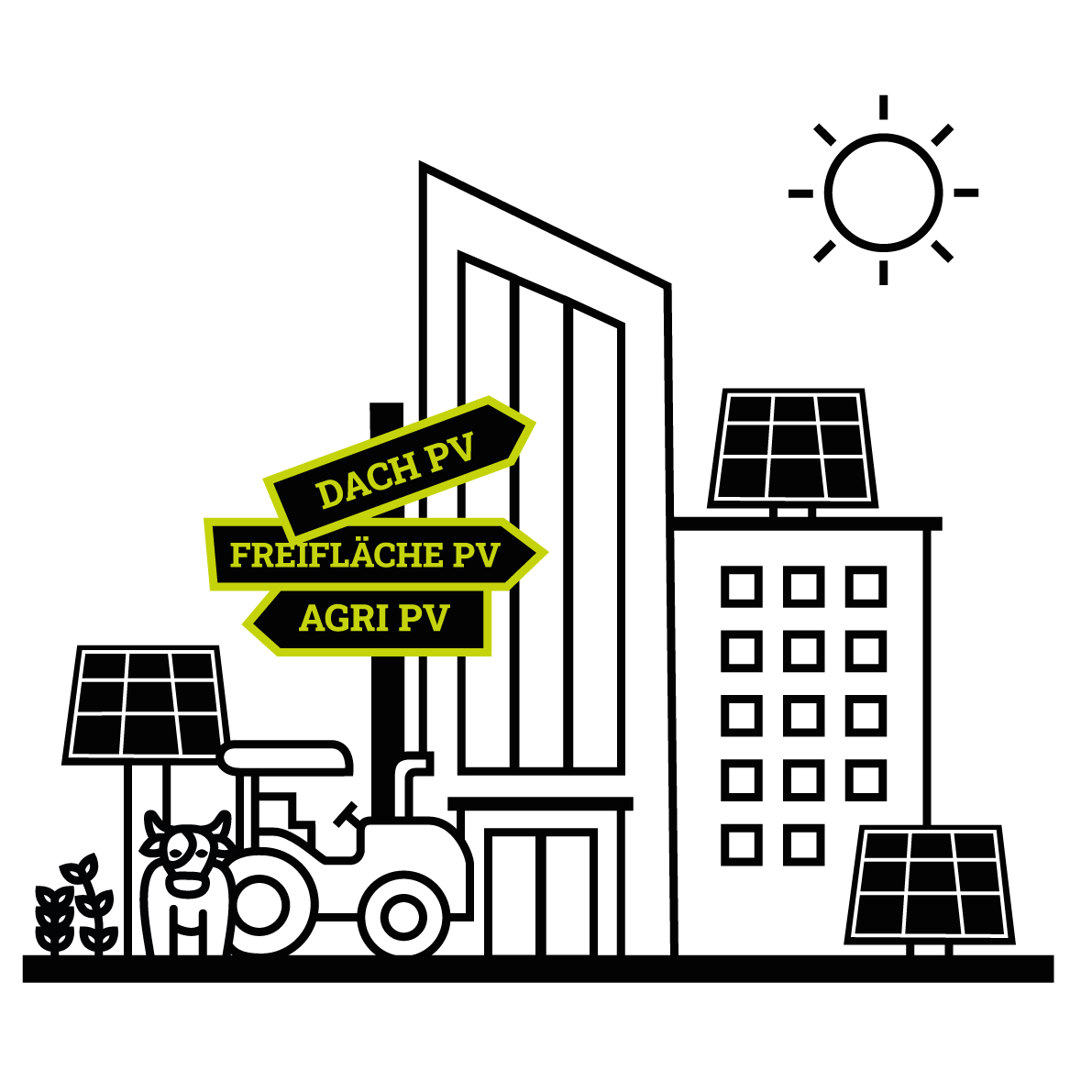
Would you like to learn more about ground-mounted photovoltaics and photovoltaics in general?
Leasing is just one of several ways to harness the potential of your land. From traditional ground-mounted solar arrays to innovative concepts like agri-PV, there are various ways to use agricultural land in an economically viable and sustainable manner.