

Germany’s agri-PV potential
Not all agricultural land is suitable for agri-photovoltaics. According to the Federal Environment Agency and the Öko-Institut, approximately 4.3 million hectares are potentially suitable. So-called disadvantaged areas—that is, arable and grassland with low agricultural productivity—are particularly well-suited. However, even areas with high competition for land use can be considered for agri-photovoltaics. In these cases, elevated module racks or vertical photovoltaic fences are used to create space for livestock and feedlot operations, arable and vegetable farming, or the cultivation of specialty crops.
Cattle Farming and Agri-PV
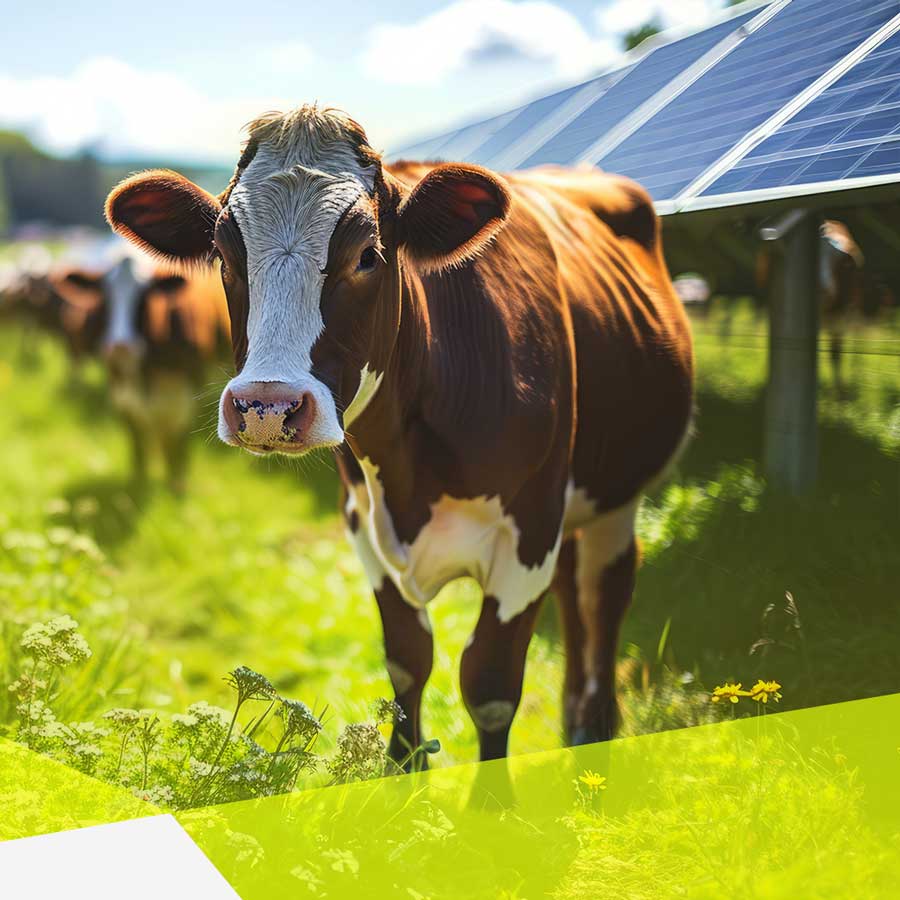
In particular, grazing cattle, cows, and dairy cows can be ideally combined with solar power generation. Under the solar modules, which are at least 2.10 meters high, the animals find shelter from extreme weather conditions such as rain, hail, or heat. At the same time, the cooler environment in the shade helps regulate water balance and improve animal welfare. The soil also benefits: partial shading prevents the pastures from drying out too quickly, preserves soil moisture, and prevents erosion—factors that can increase productivity in the long term.
Specialty Crops and Viticulture
The same applies to the cultivation of shade-tolerant specialty crops such as berries, lettuce, grapes, and tomatoes. Modulated light transmission can create a beneficial microclimate for them, which can lead to more uniform ripening and help prevent sunburn and drought stress. In addition, reduced evaporation lowers irrigation requirements—a decisive advantage, especially in water-scarce regions.
Challenges in German Agriculture
German agriculture finds itself caught between economic, environmental, and social uncertainties. Extreme weather events resulting from climate change threaten crops, while stricter environmental regulations and rising operating costs are putting pressure on profitability. At the same time, consumers are demanding sustainable products but are often unwilling to pay the premium for them. In short: Farmers must operate productively and in a climate-conscious manner—all while facing increasing regulatory pressure and uncertain market conditions.
Why Farmers Benefit from Agri-Photovoltaics
Combining agriculture and energy production on the same land—that is the essence of agri-photovoltaics. This technology offers farmers both economic and agroecological benefits. It can serve as an additional source of income or a safeguard against poor harvests, thereby securing the farm’s long-term viability. At the same time, the solar panels protect both animals and plants, reducing the need for pesticides. Another advantage: Solar panels generate revenue even during months when agricultural land lies fallow. The electricity produced can also be used on-site for the farm’s own needs, such as powering machinery or irrigation systems. This allows farmers to counteract volatile electricity prices and become increasingly energy self-sufficient.
Work with experienced local solar specialists
Agri-photovoltaics can be a valuable addition on the path to sustainable agriculture—provided it is implemented with an experienced partner who understands the specific requirements of the agricultural sector. The team at hep solar, based in Güglingen, Baden-Württemberg, has been developing, building, operating, and financing solar parks in Germany and around the world for over 15 years. With customized solar solutions, the Swabian solar specialist adapts specifically to local land requirements and offers farmers a comprehensive solution that benefits people, animals, and the environment.
Sources: FNR: Media Library – Land Use in Germany, Agri-Photovoltaics | EnBW, BMEL – Cattle, hep solar