

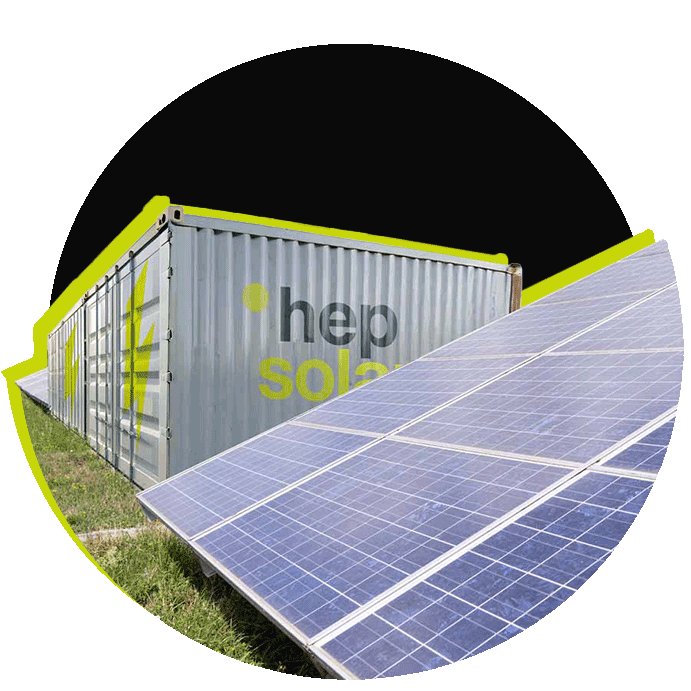
Battery storage systems capture energy when production exceeds consumption and release it later when demand rises. In practice, these are typically modular large‑scale storage units—industrial container systems holding hundreds of battery modules. Hybrid solutions are also becoming increasingly common: storage systems operated alongside a photovoltaic installation at the same site.


I’m Martin Vogt, CPO at hep solar, where I oversee all global photovoltaic projects. As renewable energy continues to expand, Battery Energy Storage Systems (BESS) are becoming increasingly important. Here are the key facts you should know.

Large‑scale storage systems refer to industrial container units containing hundreds of battery modules. They help stabilize the grid, smooth peak loads, and enable arbitrage opportunities on the electricity market.

Hybrid solutions are battery systems that work alongside a photovoltaic plant at the same site. They regulate the plant’s output by capturing surplus solar energy and feeding it into the grid later.
Why Battery Storage Systems are Essential
Midday
As more wind turbines and solar plants come online, the demand for energy storage continues to grow. Renewable energy is not always generated when it is needed, but rather when the sun shines and the wind blows. Around midday, solar production often peaks, creating excess electricity that drives market prices down—sometimes even into negative territory. Without sufficient storage capacity, grid congestion can occur, forcing renewable plants to curtail production and resulting in the loss of valuable clean energy.

Evening
In the evening, however, when demand rises, solar plants no longer generate electricity. Without storage, the system must rely on conventional energy sources to cover the gap. This is inefficient and represents a missed opportunity for climate protection. This is where battery storage comes into play: it captures excess energy generated at midday and releases it when needed—during the evening hours or in times of grid congestion. In this way, storage makes renewable energy dispatchable, stabilizes the grid, and reduces dependency on conventional power sources.
hep solar and Toshiba ESS: Battery Storage Projects in Japan
hep solar is developing multiple battery storage sites across Japan. In a strategic partnership, Toshiba Energy Systems & Solutions (ESS) supports these projects with engineering, procurement, and construction (EPC) services, as well as aggregation and system integration—ensuring efficient operation and optimized market participation.
FAQ: Battery Storage with Photovoltaics
Definition of a Battery Energy Storage System
A battery energy storage system (BESS) stores electrical energy and feeds it back into the grid when needed. It balances short-term fluctuations between generation and consumption, helping to stabilize the grid and enhance security of supply.
Independence from Fossil Backup Power Plants
Energy storage decouples renewable generation from consumption. Solar surplus produced at midday can be stored and dispatched later—during the evening or early morning hours. This prevents the loss of clean energy and reduces reliance on fossil-fuel backup power plants.
Three Common Types of Energy Storage
Common energy storage technologies include pumped-storage hydropower, battery storage, and thermal storage. For short-term load shifting and applications such as peak shaving, battery storage is particularly flexible and efficient.
The Energy-Copilot
Battery systems absorb excess electricity and release it when demand increases. Whether integrated into hybrid solar plants or deployed as standalone industrial units, they help prevent grid congestion, smooth peak loads, and maintain frequency stability.
Battery Storage Systems Enable Arbitrage Effects
Battery storage systems leverage price volatility at energy markets—charging during low-price periods and discharging when prices rise. Additional income streams come from ancillary grid services such as frequency regulation and balancing power.
Energy Storage Done Right
Battery systems don’t generate electricity themselves—they rely on surplus. Their profitability depends heavily on volatile market prices. In regions with many storage units, simultaneous reactions to the same price signals may cause cannibalization effects.
Between Relief and Strain: Using Storage the Right Way
This depends on the location and the operational strategy. When deployed correctly, storage systems can prevent local grid congestion by absorbing surplus electricity instead of curtailing generation. However, if too many systems discharge simultaneously during periods of high prices, this can place additional strain on the grid.
Expertise for Project Success
Planning, financing, and marketing storage projects is complex. Profitability depends on factors such as location, market prices, grid integration, and regulatory frameworks. Experienced project developers bring in-depth expertise in site acquisition, permitting processes, financing, power purchase agreements, and strong industry networks – all of which are crucial for project success.
Still Having Questios?
The most important aspect of battery storage is personalized guidance. If you have any questions, feel free to reach out at any time. Our team of battery storage experts will get back to you.
Use the contact form now and request a consultation without any obligation!
What Types of Photovoltaics Does hep solar Offer for Energy Storage?
We are the experts in photovoltaics, battery storage, and energy management—providing customized solutions that combine technology, efficiency, and sustainability in the best possible way. With years of experience and deep system expertise, we are your reliable partner for future‑proof energy concepts.
Ground-Mounted Photovoltaics
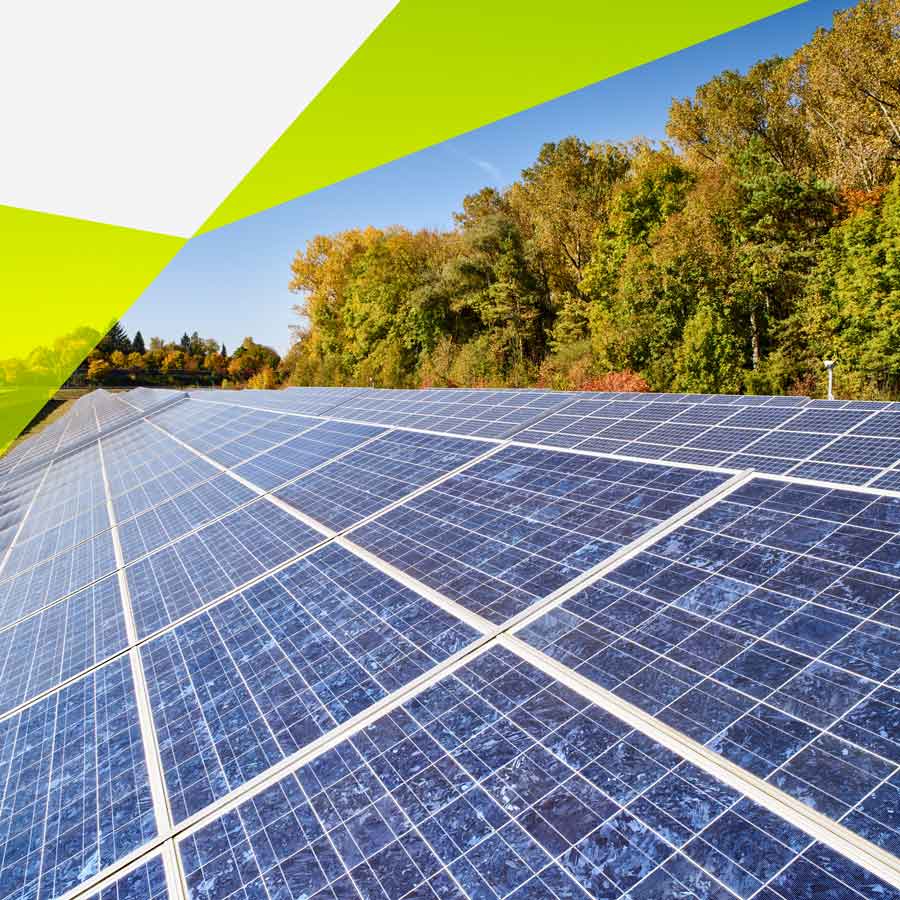
We develop customized ground‑mounted photovoltaic systems on suitable plots of land—and we are continuously looking for new sites that we can lease on a long-term basis.

Agrivoltaics
Our agri‑photovoltaic systems combine clean energy generation with active agricultural use—an ideal solution for farms looking to increase the overall productivity and profitability of their land
Repowering
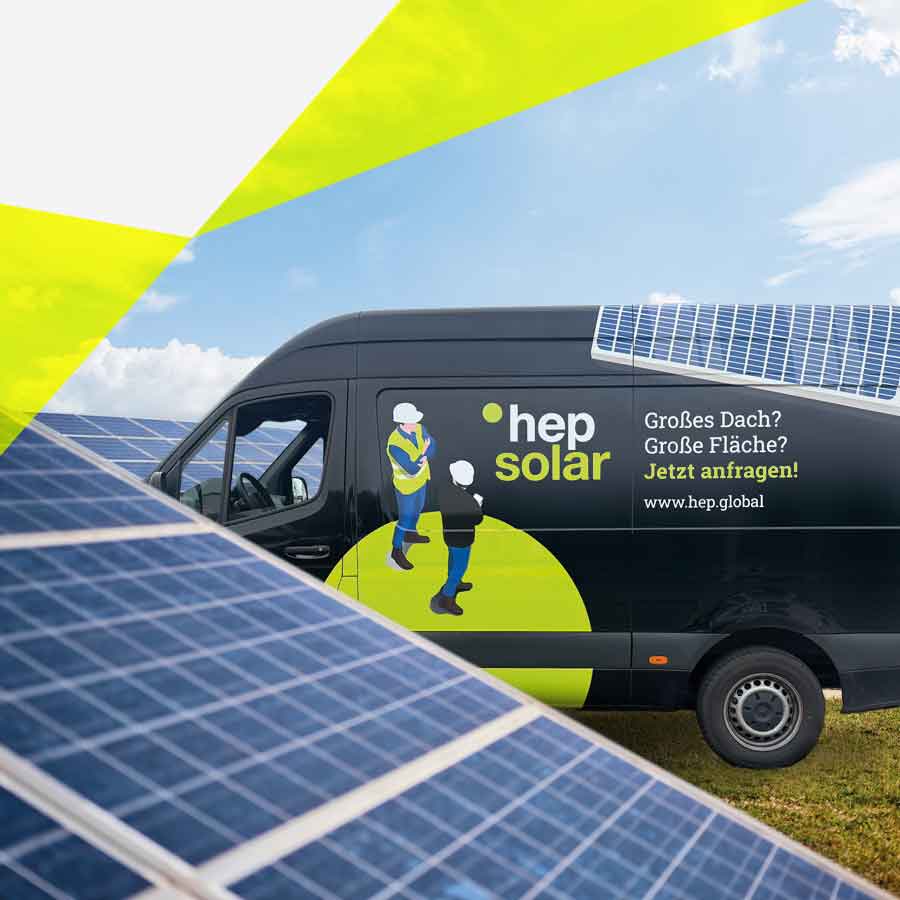
More performance, fewer resources: With repowering, you modernize your system, increase efficiency, and extend its lifespan—paving the way for a sustainable future.

Battery Storage in Your Depot?
Capital can achieve more when it is allocated strategically: The hep solar Invest ELTIF invests in solar and storage projects, combining the long‑term stability of real‑asset investments with a more flexible approach designed around the needs of private investors.