


When developing our photovoltaic projects, we take into account requirements that can support the future recovery and recycling of materials from solar modules. To this end, we collaborate with partners from research and industry and monitor the latest developments in recycling and the circular economy. Our goal is to improve the conditions for the most efficient use of resources possible throughout the life cycle of solar modules.
Raw Materials Recovery and Environmental Impact
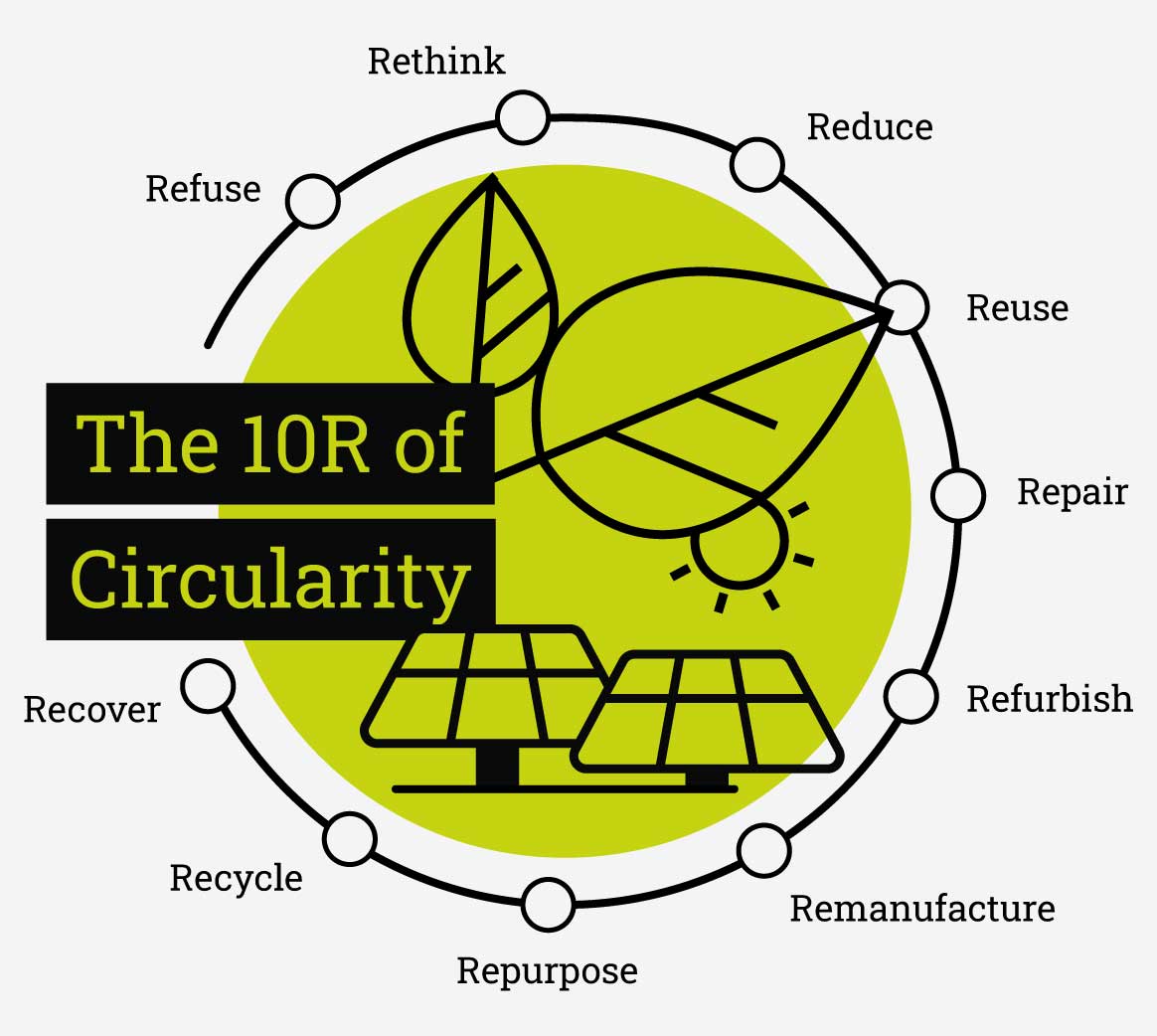
The 10R principles serve as a guiding framework for the circular economy. At hep global GmbH, we take particular care to consider aspects such as durability, recyclability, and transparency of material flows as early as the project development phase. The goal is to improve the conditions for the subsequent recovery of materials and to ensure that circular economy principles are taken into account throughout the life cycle of facilities. The actual reuse or recovery of materials depends on the specific technical, economic, and regulatory conditions in place at the time of plant decommissioning.
Opportunities for a European Circular Economy in Solar
A circular economy is becoming increasingly important for the solar sector. At hep global GmbH, we collaborate with partners along the value chain to better understand and document the material flows of solar components. The insights we gain support our assessment of potential circular economy and recycling approaches in the solar sector. In addition, we participate in professional exchanges on current developments in the recycling of solar components.
Incentives for Efficient Decommissioning and Recovery
A well-functioning circular economy can support the reuse and recycling of components from solar power systems. The availability of markets for used and recyclable components can facilitate the transition to the end-of-life phase. The goal is to ensure that materials are reused or recycled to the greatest extent technically and economically feasible.