


Supplier qualification is a structured selection process that ensures our partners meet the highest standards in environmental, technical, and procurement criteria.
Our goal: Build long-term partnerships with suppliers who share our values and contribute to sustainable development.

ESG Quality
We evaluate suppliers based on ecological and social criteria, actively driving improvements in these areas. This is grounded in internationally recognized standards and our internal selection and monitoring processes.

Technical Criteria
Components must withstand site-specific conditions like climate, corrosion, and loading. We assess their lifespan and operational reliability in the relevant geographic environment — ensuring long-term, dependable performance.

Procurement Processes
Efficient communication, clear responsibilities, and on-time delivery are essential. We promote continuous performance improvement and build long-term, reliable relationships with our suppliers.
Our Responsibility in the Supply Chain
A core element of our supplier selection is adherence to the highest environmental and social standards. For investments in environmentally sustainable economic activities under the EU Taxonomy Regulation (Art. 9), we commit to internationally recognized guidelines that promote responsible business practices and human rights protection:

OECD Guidelines for Multinational Enterprises
Recommendations for responsible business conduct in global supply chains, with a focus on transparency, human rights, environment, and anti-corruption.
UN Guiding Principles on Business and Human Rights
Framework for respecting human rights by companies, based on the pillars of “Protect,” “Respect,” and “Remedy.”
ILO Core Conventions
International standards on labor rights, including freedom of association, prohibition of child and forced labor, and non-discrimination in the workplace.
International Bill of Human Rights
The foundation of global human rights norms, consisting of the Universal Declaration of Human Rights and the two core UN covenants on civil, political, economic, social, and cultural rights.
Note: These regulations apply to investments in environmentally sustainable economic activities under the EU Taxonomy and concern only specific procurement decisions related to Art. 9 investments.
Materiality Analysis as the Foundation
The materiality analysis forms the cornerstone of our supplier evaluation. It helps us pinpoint the social issues most relevant to our business model — not just to minimize risks, but to actively promote positive working conditions throughout the supply chain.

- Preventing forced and child labor
- Equal opportunities and discrimination-free workplaces
- Enabling workplace co-determination
- Fair compensation
- Compliance with working hours regulations
- Occupational health and safety
- Strengthening legal employment relationships
How Our Supplier Qualification Process Works
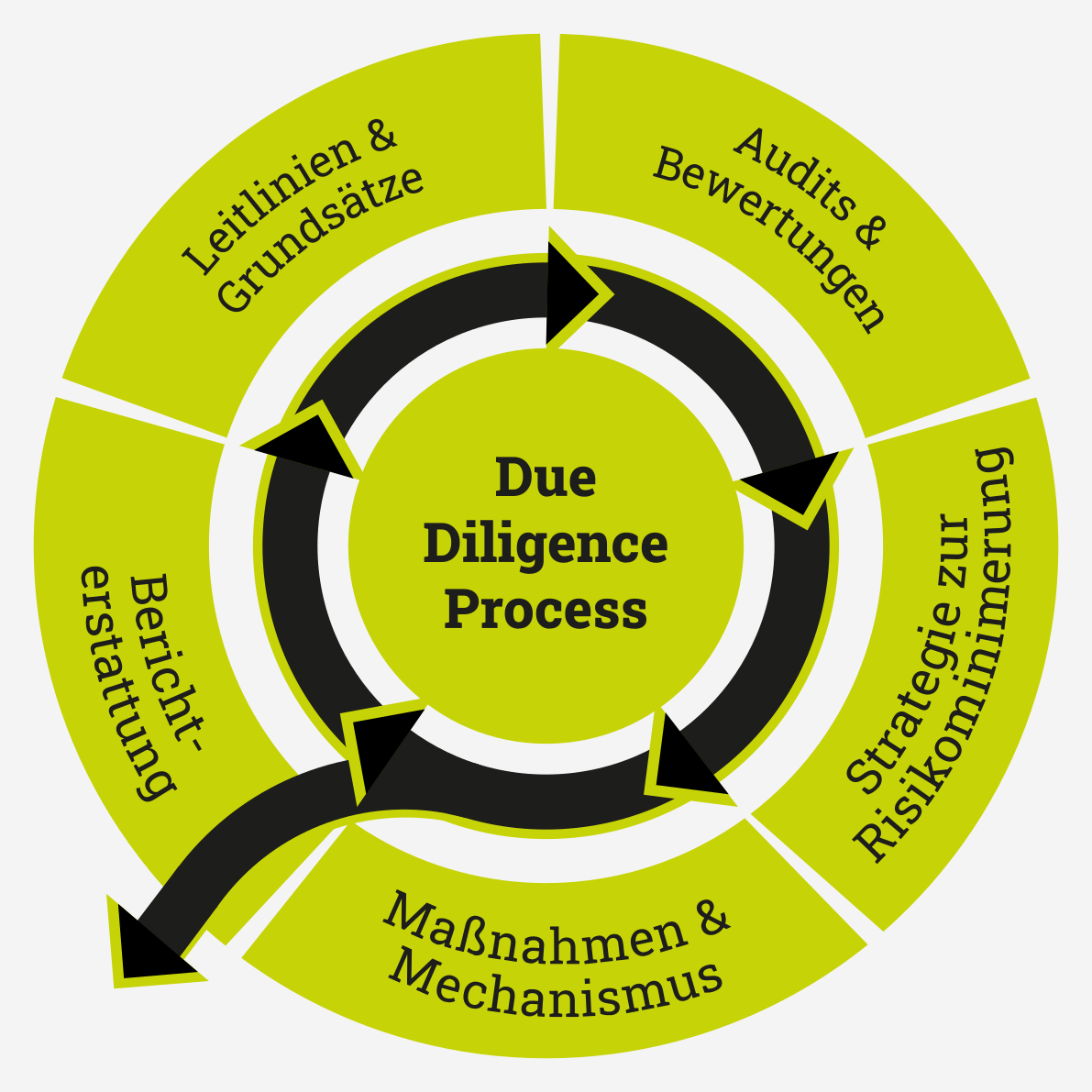
hep solar’s supplier qualification process is designed as an ongoing development journey. Our aim isn’t just to evaluate partners — it’s to drive improvements together. We follow clear guidelines and principles for responsible collaboration, using audits and production condition assessments to gain key insights. These inform our risk mitigation strategies, which we regularly refine. Measures and grievance mechanisms are continuously reviewed and enhanced, with transparent reporting throughout to enable steady optimization.
As part of our collaborative supplier development, we leverage these established tools:

Self-Assessment Questionnaire
Results from our structured questionnaire form the basis for targeted action plans developed jointly with suppliers — addressing both preventive risk avoidance and corrective measures for existing issues. These must be implemented either before production starts or within a defined timeframe.

On-Site Audits
We conduct targeted audits for higher-risk suppliers to verify self-assessment data. Beyond core criteria, we examine advanced environmental aspects like pollution prevention measures and effective waste management.

Supplier Code of Conduct
The hep solar Supplier Code of Conduct spells out our sustainability standards for our global supplier network in detail. Updated in spring 2024 to align with the German Supply Chain Due Diligence Act, it provides clear explanations of guiding principles for responsible global operations.
Strategic Value from Supplier Qualification
Targeted supplier selection and development don’t just strengthen our supply chain — they build shared values and enduring partnerships. Here’s the payoff at a glance:
Thorough vetting spots potential risks early, helping us avoid supply disruptions, quality issues, and reputational damage — protecting our investors too.
By choosing suppliers who fully comply with EU environmental and social standards, we actively advance our sustainability goals and foster a responsible value chain.
Our rigorous process enables stable, trust-based relationships that provide a solid foundation for collaboration and joint innovation.
Precise selection cuts long-term costs by minimizing rework, claims, and production downtime.
Beyond supplier qualification, we pursue these additional impact value chains:

Community Engagement
We foster dialogue and collaboration with local communities to deliver sustainable projects and create shared societal value.

Circular Economy
We prioritize the reusability of technical project components to conserve resources and strengthen raw material cycles.
Avoided Emissions
Solar energy as a low-carbon solution delivers forward-looking energy security while slashing CO₂ emissions across our energy system.
Our Ecological Responsibility
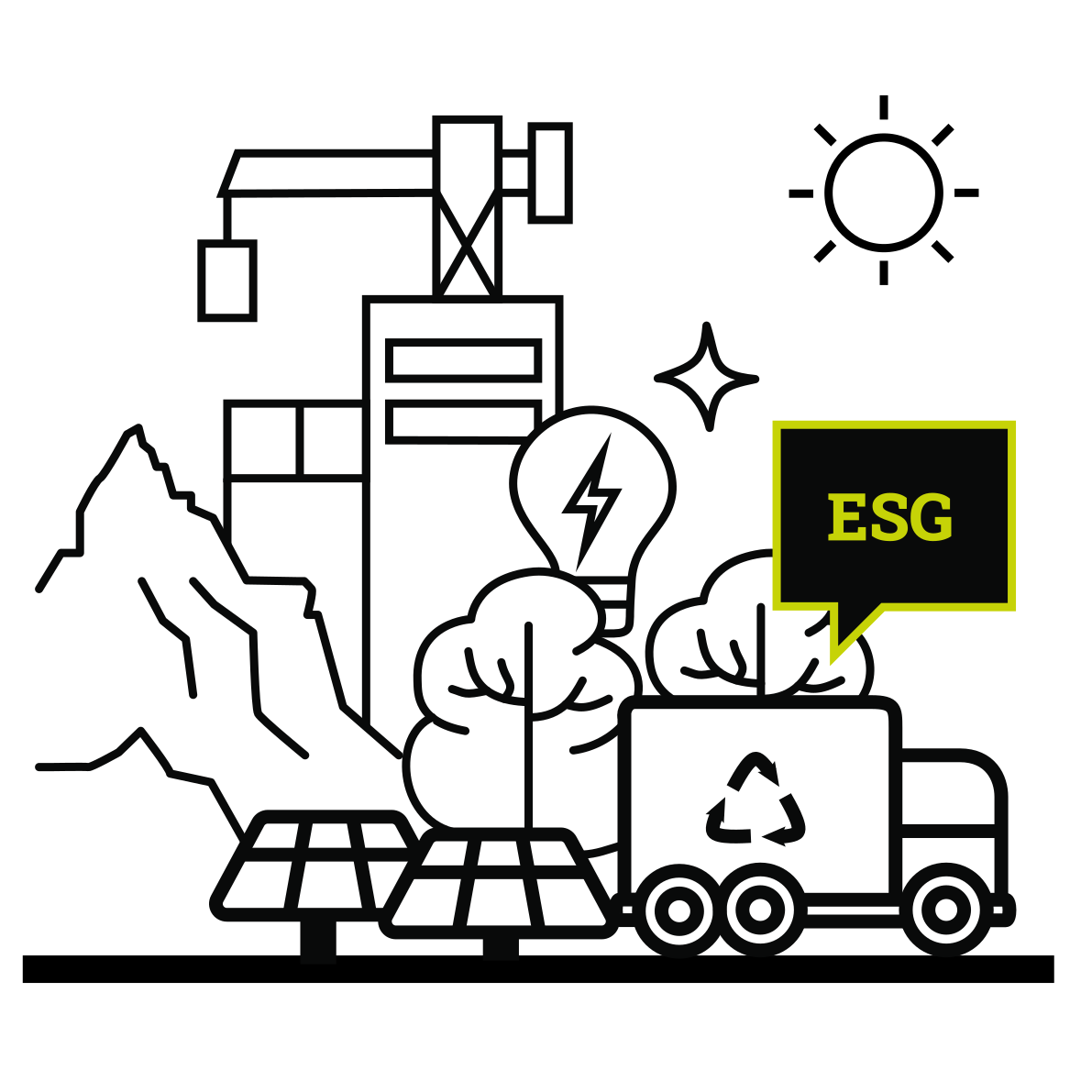
Supplier qualification is a cornerstone of our holistic sustainability strategy. Combined with our other impact value chains, they’re helping shape a future where ecological, social, and economic responsibility align seamlessly. Explore our sustainability strategy — the foundation that ties it all together.