Since 2022, hep solar has once again been actively involved in solar project development in Germany. Four years later, we are on the verge of breaking ground on a number of projects in Bavaria. But before the mounting structures and modules are installed, there are often quite different and sometimes surprising tasks to be tackled. This article explores archaeological finds on the one hand and explosive ordnance disposal on the other.
More Than Just Soil and Stones – Unique Aspects of Project Development

hep solar has more than 15 years of experience in project development in the United States, Canada, and Japan. Nevertheless, our project development teams are constantly faced with new and challenging tasks, because no two projects are alike.
Where Solar Energy Meets History
The Bavarian State Office for the Preservation of Historical Monuments has granted a permit subject to certain conditions for a solar park near Regensburg. Settlement structures, ditches, and even a burial ground are believed to lie beneath the surface. The presumed archaeological sites date from the Linear Pottery and Comb Ceramic periods (from ca. 5,500 BCE) through the Early Bronze Age and Urnfield periods to the Hallstatt and Early La Tène periods, as well as into the Roman Imperial period (up to ca. the 4th century CE).
In practical terms, this means that construction must be supervised by professional archaeologists, groundwork must be carried out in phases, and if artifacts are discovered, work must be temporarily adjusted or suspended. Such measures require close coordination between project development, government agencies, archaeologists, and the construction team—but they are an important contribution to the responsible stewardship of cultural heritage.
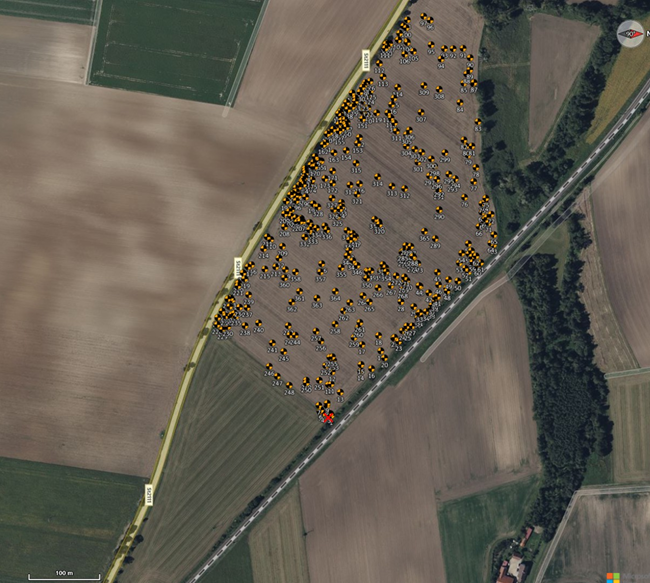
At the same time, an explosive ordnance survey is being conducted at this park, using methods similar to those employed by archaeologists: through historical research, site inspections, and advanced surveying techniques, a total of 360 suspected cases were identified there, all of which require further examination. By comparison: At another solar park near Munich, there were “only” around 135 suspected cases in the initial surveys—and ultimately a small grenade that had to be removed by the explosive ordnance disposal team.
The results of a screening of over 300 identified suspected cases
How is an explosive ordnance survey conducted?
The process is significantly more complex than it appears at first glance. It begins at a desk and may end with the explosive ordnance disposal team. Verifying that an area is free of explosive ordnance is not only a safety consideration but also a formal milestone: an area can only be developed in the normal course of business once the appropriate documentation has been provided.
1. Historical Research
Analysis of the site’s past uses, evaluation of historical aerial photographs, and findings regarding potential wartime events such as bombing targets, combat operations, or former ammunition depots.
2. Risk Assessment
Based on this research, an assessment is made of the likelihood of unexploded ordnance being present in the planned construction area.
3. On-site Visual Inspection
An initial survey of the site can reveal surface anomalies.
4. Geophysical Measurements
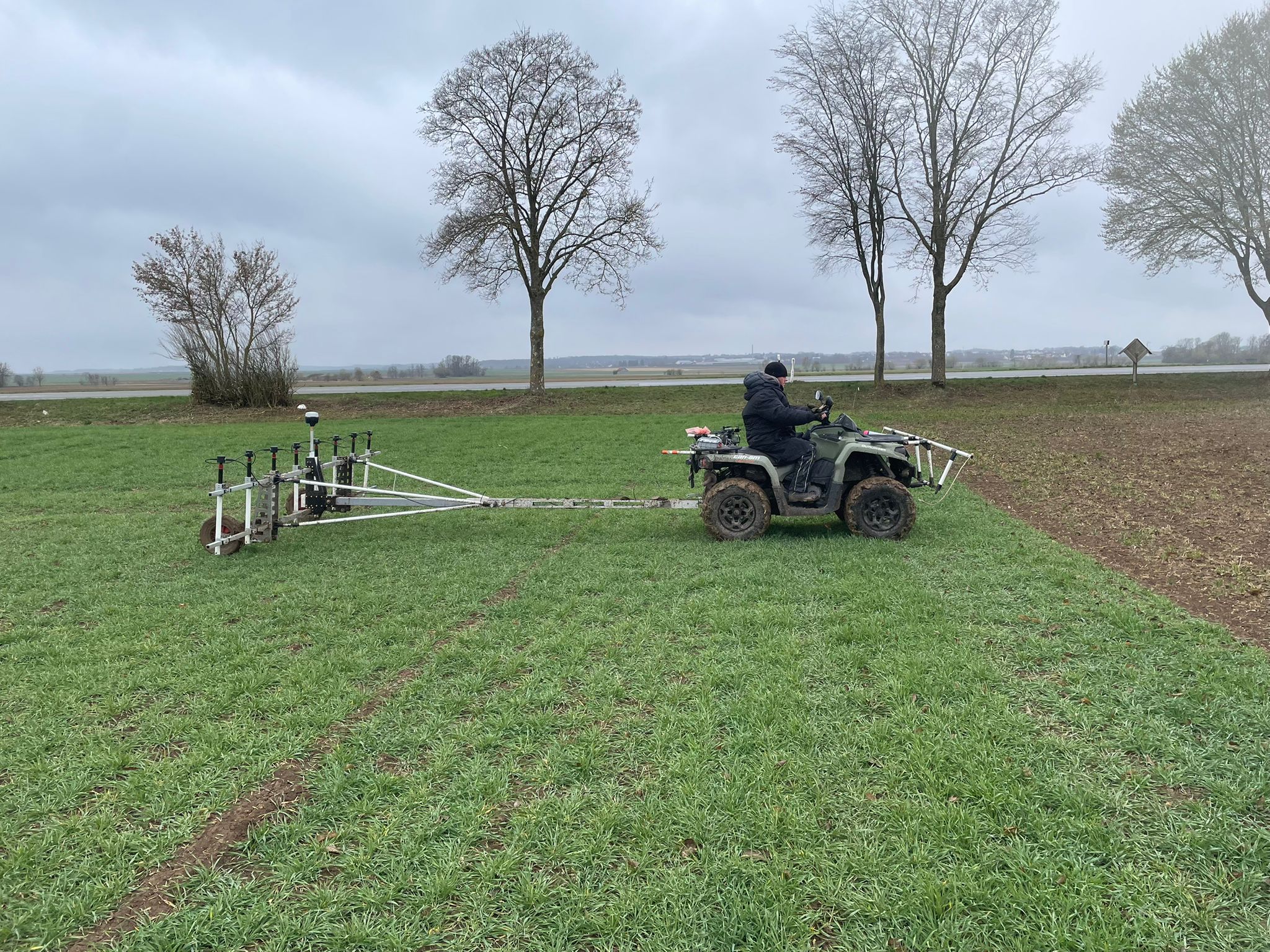
Explosive ordnance often consists of ferromagnetic materials that distort the Earth’s natural magnetic field, thereby making it detectable. Magnetometers are used to identify these anomalies in the Earth’s magnetic field.
The use of a vehicle-mounted probe system with GPS tracking to precisely georeference the measurement data.
5. Analysis & Overview
The measurements provide an overview of the area, highlighting so-called suspected cases.
6. Selective Probing
Suspicious areas are first excavated by hand—often using shovels and under strict safety protocols.
7. Eviction by Specialized Agencies
If ammunition is actually found, the state explosive ordnance disposal unit will carry out the proper clearance.
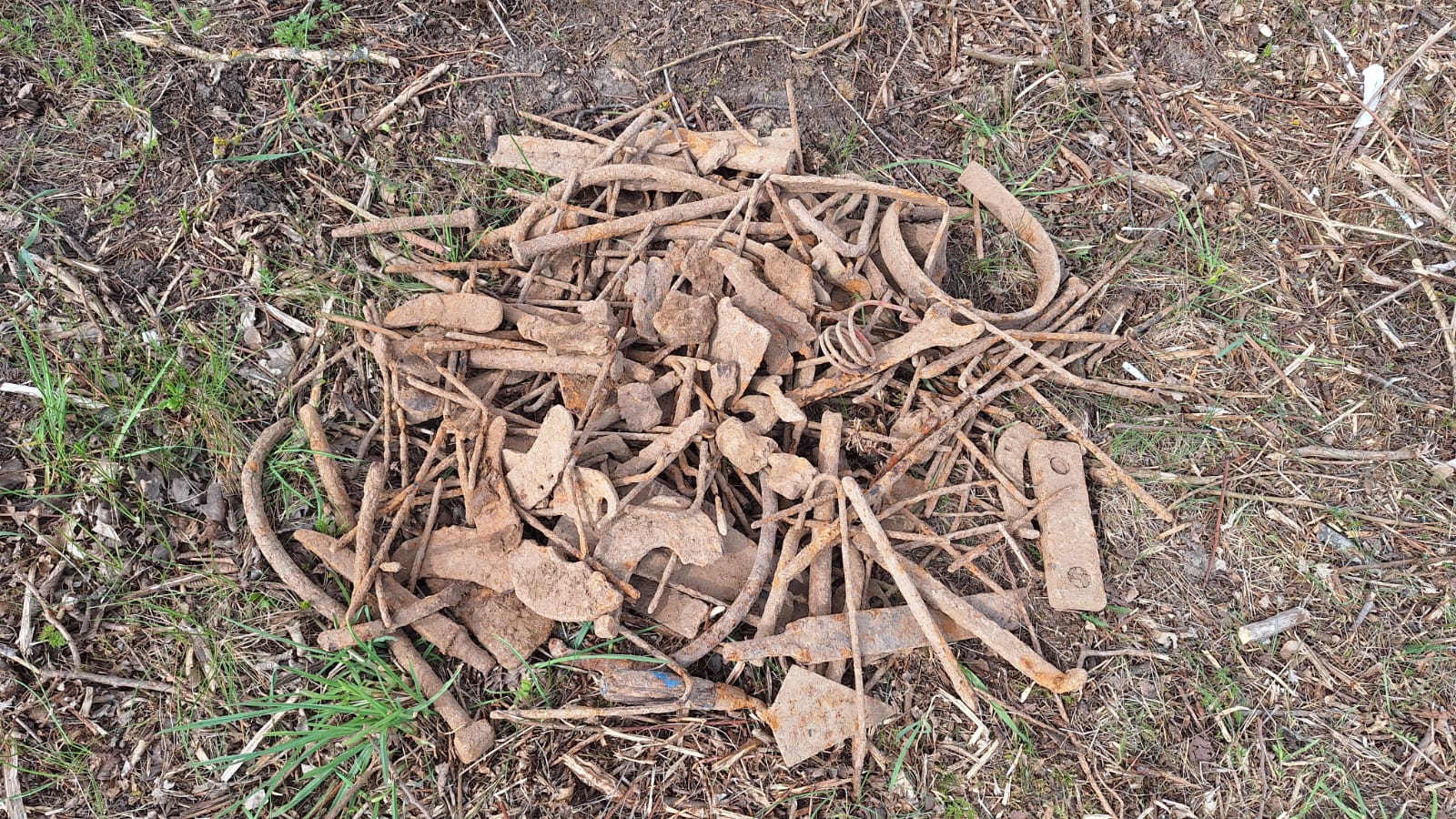
A harmless find during an exploration: heavily corroded, dirt-encrusted scrap metal