
Agri-PV Potential in Germany
Not all agricultural land is suitable for agrivoltaics (Agri-PV). However, according to assessments by the German Environment Agency (Umweltbundesamt) and the Öko-Institut, around 4.3 million hectares are generally considered suitable. Particularly promising are so-called disadvantaged areas, including arable and grassland with comparatively low agricultural productivity.
Depending on the intended use, different system designs can be implemented. These include elevated solar modules and vertical photovoltaic systems that allow continued agricultural use of the land. As a result, activities such as livestock grazing, arable and vegetable farming, or the cultivation of specialty crops can be combined with solar power generation.
Cattle Farming and Agri-PV
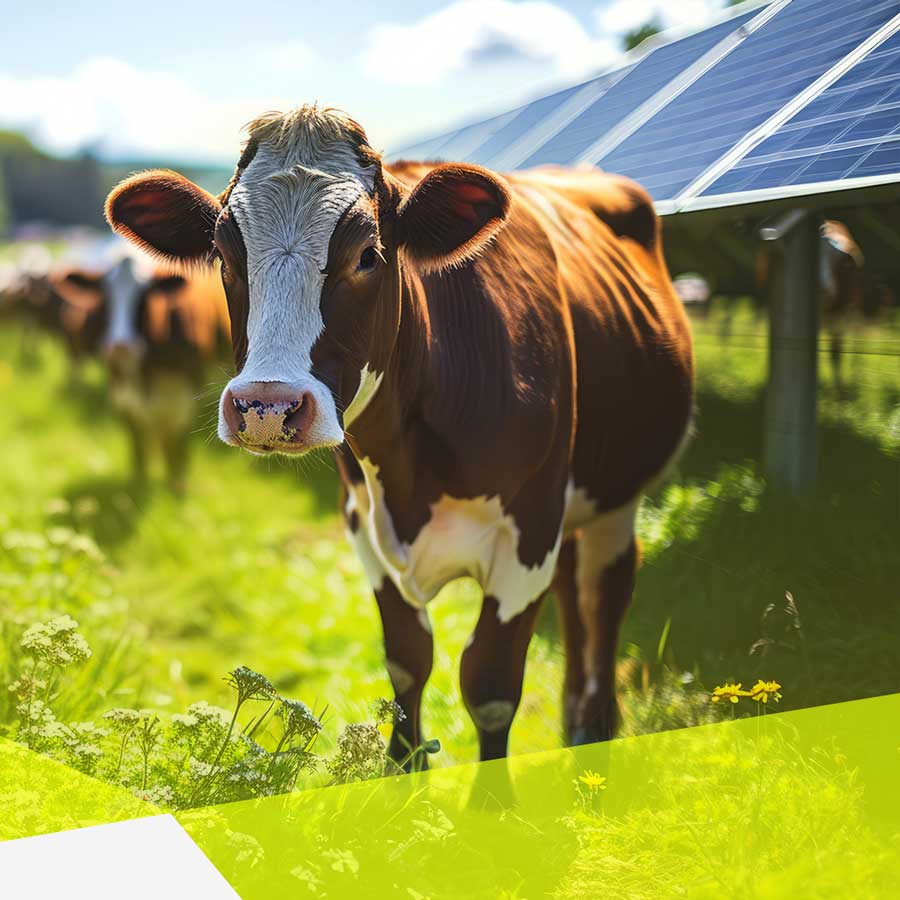
Cattle grazing can generally be integrated with Agri-PV systems. When solar modules are installed at sufficient height, they can provide animals with additional sheltered areas that offer protection from weather conditions such as intense sunlight, rain, or hail.
Depending on local conditions, Agri-PV may also provide benefits for land management. Partial shading can help retain soil moisture for longer periods and may reduce the impact of extended dry spells. However, actual outcomes depend on site-specific conditions and system design.
Specialty Crops and Viticulture
Agri-PV is also being explored for the cultivation of certain specialty crops. Crops such as berries, lettuce, and grapes may benefit from partial shading under specific conditions. This can create a modified microclimate that may help protect plants from excessive solar radiation and drought stress.
In addition, reduced evaporation may have a positive effect on irrigation requirements. Whether and to what extent these benefits occur depends on the crop type, site conditions, and farming practices.
Challenges Facing Agriculture
Agriculture is facing a wide range of challenges. Extreme weather events linked to climate change, rising operating costs, and increasing regulatory requirements are placing growing economic pressure on many farms. At the same time, expectations for resource-efficient and sustainable production continue to rise.
Against this backdrop, concepts that enable more efficient land use while creating additional economic opportunities are gaining importance.
Why Agri-PV Can Be Attractive for Farmers
Agrivoltaics combines agricultural production and solar power generation on the same piece of land. For farming operations, this can create additional revenue opportunities and expand the productive use of existing land resources.
Depending on the application, the electricity generated can also be used directly on the farm, for example to power irrigation systems or electric machinery. This can help improve energy cost planning and increase on-site energy self-sufficiency.
Furthermore, Agri-PV systems may support more flexible agricultural management under changing climatic conditions. The specific benefits, however, always depend on local site characteristics and operational requirements.
Working with an Experienced Partner
The implementation of an Agri-PV project requires careful consideration of both technical and agricultural requirements. Thorough planning can help ensure that the land is used in a way that best supports the needs of the farming operation.
Based in Güglingen, Germany, hep solar has been developing, building, operating, and financing solar projects in Germany and internationally for more than 15 years. Through tailored solutions, the company supports agricultural businesses in implementing Agri-PV projects and integrating solar power generation into existing land-use concepts.
Sources: FNR: Media Library – Land Use in Germany, Agri-Photovoltaics | EnBW, BMEL – Cattle, hep solar